Kaspersky has uncovered a new malware framework targeting cryptocurrency investors.
Dubbed “OkoBot,” the malware initiates an infection chain that starts with social engineering tactics such as ClickFix, which tricks users into running malicious commands, or trojanized GitHub apps that deliver a backdoor to infected devices, the cybersecurity company wrote in a Wednesday report.
The malware can harvest crypto wallet files, browser data and user credentials, inject malicious extensions and capture wallet application windows to steal assets. Kaspersky said it identified multiple attacks involving this malware family since January 2026.
Kaspersky added that the malware framework evolved from “TookPS,” a malware campaign first identified in 2025 that distributed a Trojan downloader through fake software websites, and that it opens the door to copycat attacks.
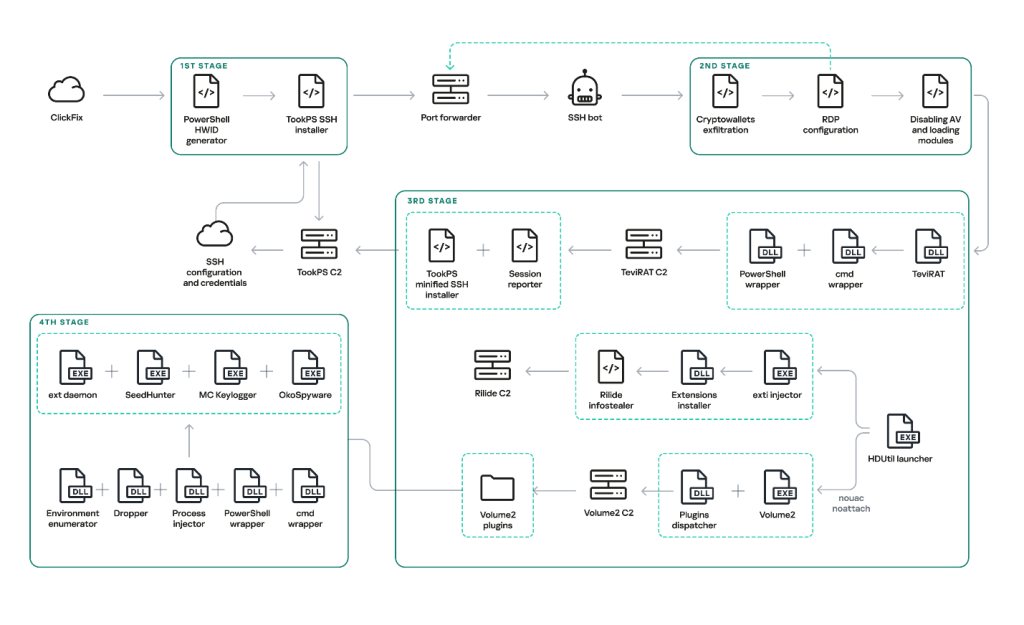
It differs from prior campaigns by orchestrating all 20 malicious payloads via an SSH tunnel, which enables the remote transport of data from infected computers to remote machines controlled by attackers.
Original OkoBot infection chain. Source: Kaspersky
Fake LinkedIn recruitment campaigns target Web3 developers with malware
Separately, a new malware campaign is seeking to infiltrate the devices of Web3 developers via fake LinkedIn recruitment opportunities, according to SlowMist.
Attackers contact blockchain developers via LinkedIn, posing as Web3 recruiters. They then send fake GitHub repositories to victims, claiming they contained the minimum viable product that needed to be tried before the interview, the blockchain security company said in a Saturday report.
The workflow closely resembles a legitimate technical interview where developers pull code, install dependencies and launch a project, which makes it difficult to notice the attack, according to SlowMist.
Related: UK sentences 2 hackers tied to $115M crypto ransom scheme
The malware aims to deliver a complete “remote access trojan” that infects devices, enabling attackers to steal project keys, cloud credentials, or wallet extension data from these developers.
“This attack is not an isolated case,” wrote SlowMist, adding that recent incidents illustrate that “attackers are increasingly leveraging scenarios such as recruitment, code reviews and project collaborations to trick developers into actively running malicious repositories.”
The report came a day after SlowMist warned of a separate malware campaign targeting macOS users, aiming to steal their credentials and hijack their Telegram sessions to ultimately trick investors into entering their wallet recovery phrases through fake websites.
Magazine: Does Botanix’s failure prove Bitcoiners don’t care about DeFi?